Tesla's Master Plan Part 4 aims to scale AI and humanoid robots like Optimus to create 'hyper abundance' and cut labor and energy costs. The vision is strategic but lacks timelines pricing and short term milestones so businesses should view it as a directional signal.
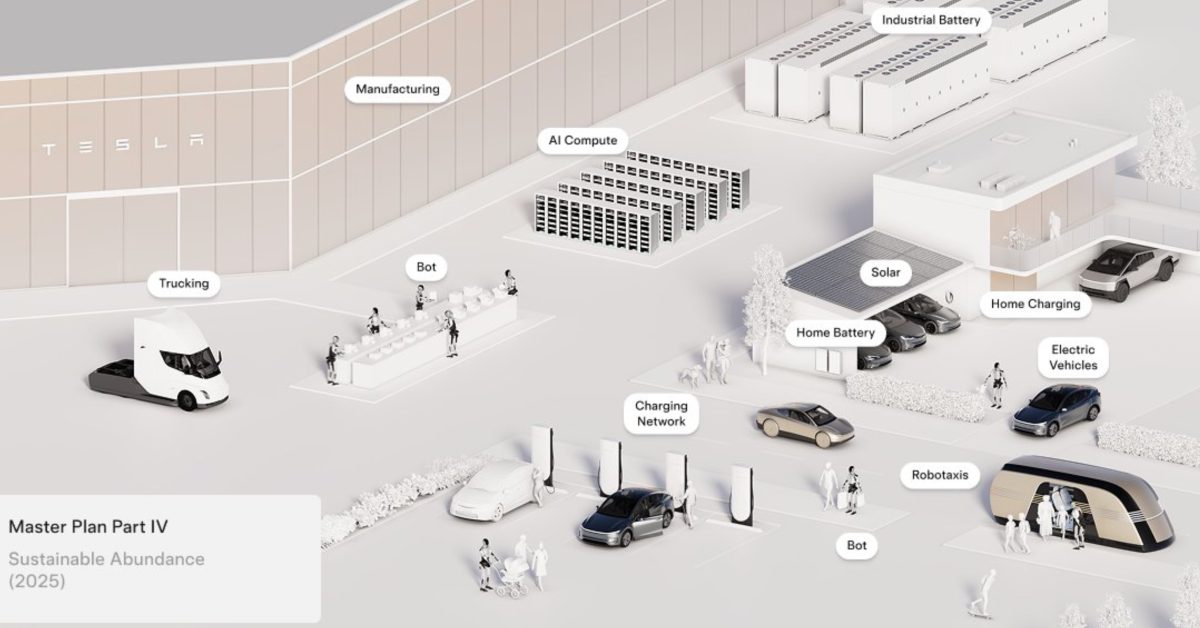
Tesla has published its Master Plan Part 4 presenting a wide ranging vision to scale AI and humanoid robots such as Optimus to produce what the company calls "hyper abundance." The document highlights Tesla's intent to push beyond cars into AI powered automation that could alter labor costs energy use and supply chains. At the same time the plan provides few concrete dates pricing details or short term milestones so businesses and investors are left balancing long term opportunity against near term uncertainty.
Historically Tesla has used Master Plans to signal strategic direction and spur industry change. Master Plan Part 4 emphasizes combined strengths in software manufacturing and battery technology to enable AI adoption in enterprise operations at physical scale. Key building blocks include Optimus humanoid robots Full Self Driving AI and Tesla scale manufacturing. Yet Tesla has a history of optimistic timing and production challenges which makes this a vision more than a roadmap for the next 1 to 3 years.
This article targets intent driven search queries such as "automation ROI" "How automation transforms workflow efficiency" and "AI adoption in enterprise operations." It also answers voice friendly questions like "How will Optimus affect manufacturing costs" and "Is automation increasing profitability in 2025" so content is optimized for conversational search and featured snippets. From an EEAT perspective citeable examples case study language and experience based insights increase credibility.
For organizations evaluating automation investments consider these points:
Even without immediate deliverables the plan matters as a strategic signal. It can accelerate investment in related AI and robotics programs force competitors to prioritize development and influence supply chain partners. For procurement and transformation leaders it is a prompt to build flexible automation roadmaps and to collect experience with implementing AI systems so teams are ready when broader humanoid robotics become commercially viable.
Tesla did not provide firm dates. Expect a multi year timeline with early prototypes and limited pilots before cost effective commercial availability.
Not immediately. Some tasks can be automated today using existing robotics and software. Full replacement of broad manual roles will depend on technical maturity safety approvals and total cost of ownership.
Run small pilots define clear KPIs such as throughput error reduction and labor cost savings then scale based on validated performance and return on investment.
Invest in integration capability data pipelines and AI friendly infrastructure. Map processes that can benefit from AI powered optimization and align pilots with measurable business outcomes.
Tesla's Master Plan Part 4 is a bold strategic statement that frames a future of AI driven hyperautomation and potential industry disruption. For most organizations it is a directional signal rather than an immediate call to change core operations. Focus on building automation capability measuring automation ROI and gaining implementation experience while monitoring Tesla for the specific product pricing and deployment milestones that will turn vision into commercial reality.
What steps is your organization taking to future proof operations against automation and robotics driven change? Share your experience and case study results to improve collective EEAT and practical knowledge.