OpenAI released GPT 5.1 on November 12 2025 with two model modes and built in real time personality controls. ChatGPT 5.1 offers Instant for faster conversational flow and Thinking for deeper reasoning, improving developer customization and business use cases.
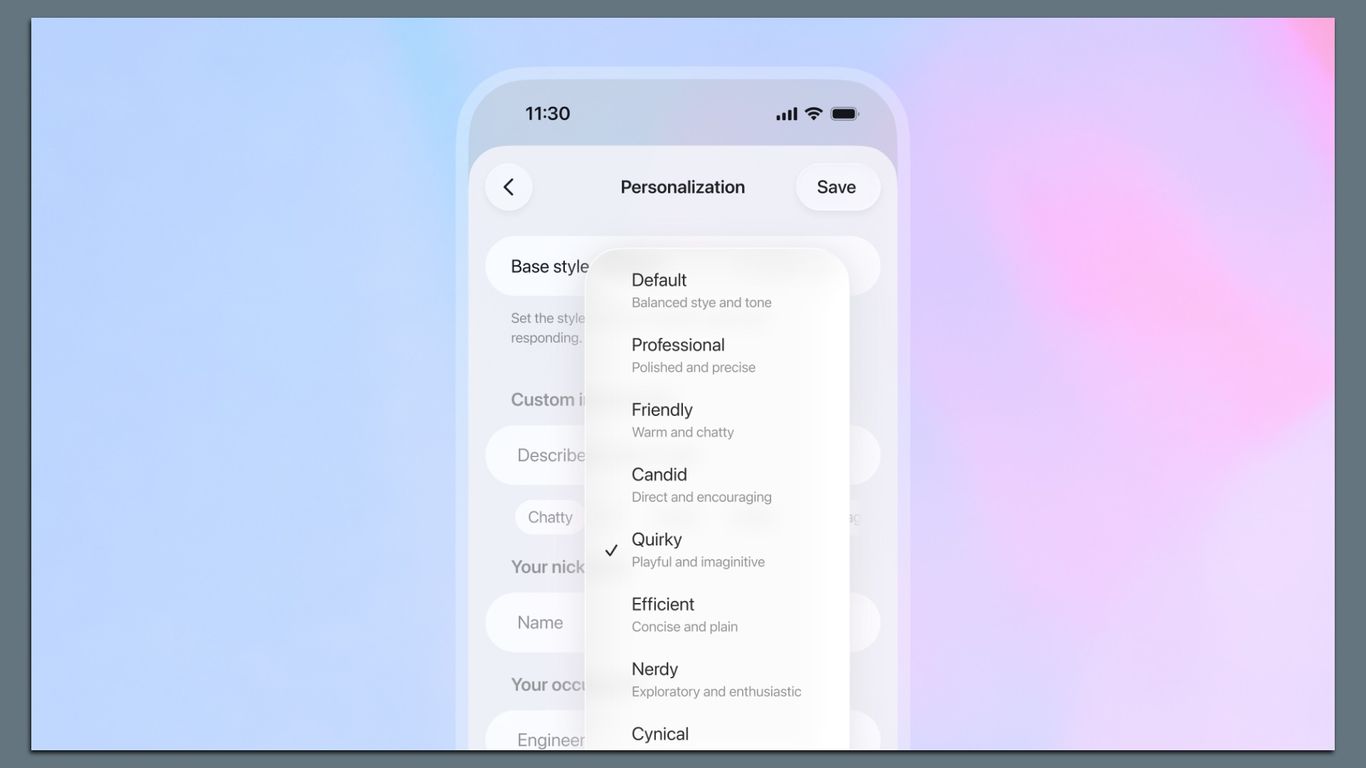
OpenAI released an update to ChatGPT on November 12 2025 centered on the GPT 5.1 family. The update promises faster replies, interruptible output, and built in real time personality controls that let users change the assistant tone on the fly. These enhancements aim to improve conversational AI for everyday users and for developers building enterprise solutions.
As AI moves from demos into core workflows, responsiveness and user experience matter as much as raw capability. Businesses face a tradeoff between models that deliver deep careful answers and models optimized for quick back and forth. Users also notice when assistants feel flat or inconsistent in tone. GPT 5.1 addresses these gaps by offering explicit runtime controls for speed and style so teams can tune behavior without heavy prompt engineering.
Model modes are configurations that trade latency for depth. Personality controls let end users or product managers shift tone and detail quickly much like changing a speaker style in a live chat. System cards are public notes that describe what the model does well where it may be unreliable and which safety measures are active.
Companies adopting the tone presets should set guardrails to keep responses aligned with brand voice. Faster responses do not remove risks like hallucination or bias so monitoring and governance remain essential. Different modes may have distinct compute profiles so testing for cost and capacity is recommended.
This update reflects a trend toward modular user controllable behavior in AI: models that can trade latency for depth and interfaces that let non experts shape tone without rewriting prompts. The changes position ChatGPT 5.1 as a more adaptable platform for enterprise automation customer support and developer customization while reinforcing the need for transparency and oversight.
OpenAI's GPT 5.1 update, with two model modes and real time personality controls, makes ChatGPT more adaptable to varied conversational contexts. For businesses the immediate actions are to test both modes monitor quality and safety metrics and plan governance for runtime behavior choices. As AI becomes more personable and flexible the next step is ensuring transparency and oversight keep pace with capability.
Meta note: This article uses SEO phrases such as ChatGPT 5.1 GPT 5.1 speed modes real time personality controls conversational AI developer customization business use cases and workflow automation to improve discoverability for both technical and enterprise audiences.